
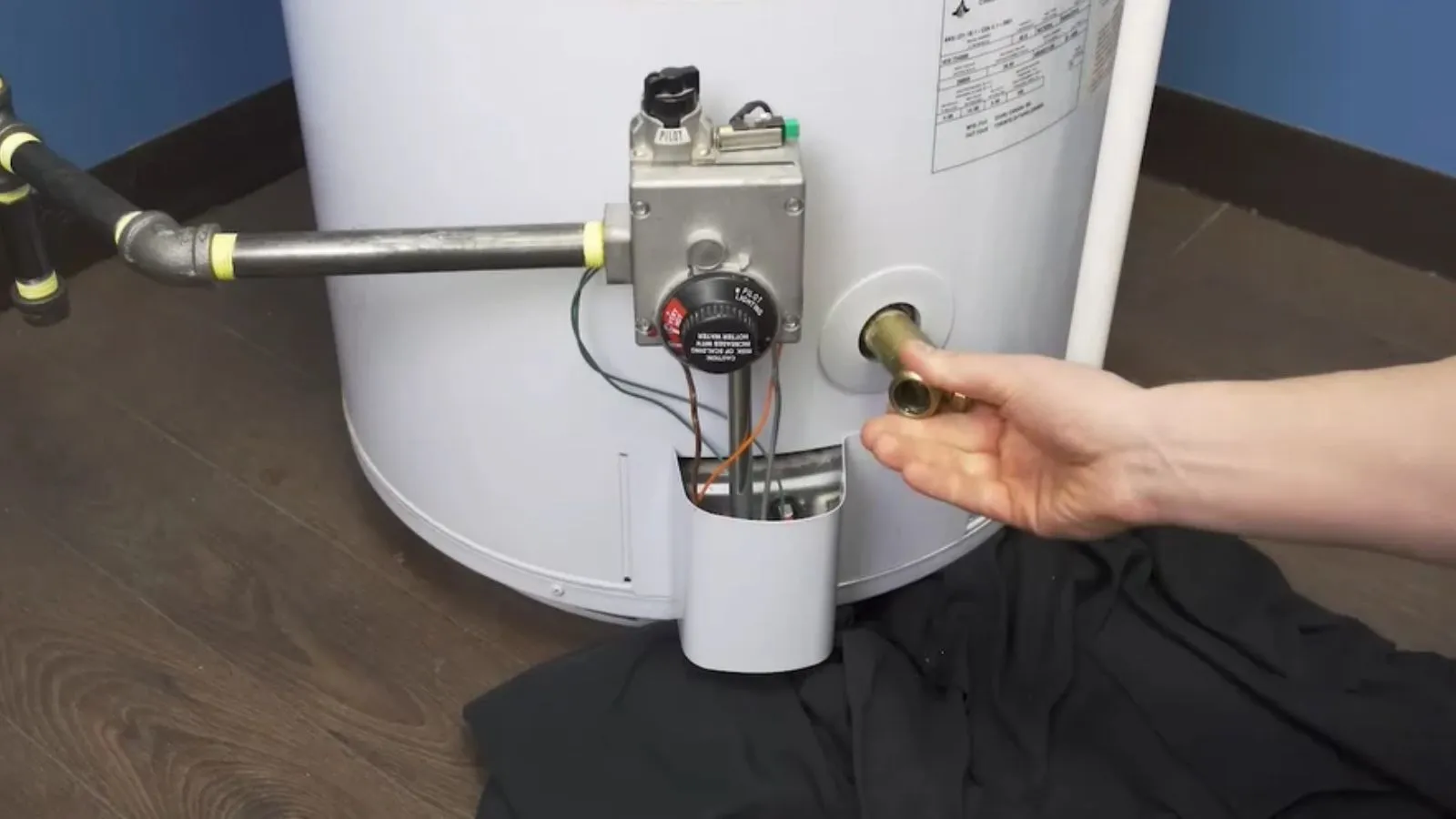
No hot water or a leaking tank at night
A water heater fails in one of two ways. It stops making hot water, which is annoying, or it leaks, which can ruin a finished basement before morning. A leak that comes from a fitting or the relief valve is often repairable. A leak from the bottom of the tank usually means the steel has rusted through.
If you see water pooling, turn off the cold water supply to the tank and switch the power off at the breaker or turn the gas control to pilot. Then call us. Do not open the drain valve on a tank that is hot and leaking, because the water can scald.
No hot water at all
On an electric tank this is often a tripped breaker, a failed upper element or a bad thermostat. On gas it may be the pilot or thermocouple.
Water that runs lukewarm
A burned-out lower element or a sediment-packed tank cannot heat the full volume.
Popping or rumbling
Sediment on the tank floor traps steam bubbles. Flushing sometimes helps, and a very old tank may be past it.
Dripping relief valve
The valve may be doing its job after a pressure spike, or it may have failed and need replacing.
What we check on a water heater repair visit
Safety first
We confirm there is no gas leak or electrical hazard and shut off what needs shutting off.
Find the failed part
We test elements, thermostats, the thermocouple, the dip tube and the relief valve.
Quote before we repair
You hear a clear price for the repair, and we tell you honestly if replacement makes more sense.
Repair and test
We fit the part, restore power or gas and run hot water at the fixtures to confirm.
Heater down?
Call the 24/7 line about water heater repair and we will book the next appointment that fits.
Repair or replace: how the decision works
Age and condition decide this more than the symptom does. A tank around the ten year mark has seen most of its life, and a repair on an old tank can be followed by a second failure a few months later. A newer tank with a bad element is a straightforward repair.
Use the table as a starting point. We confirm the call on site before any work starts.
| Symptom | Likely repair | When we suggest replacement |
|---|---|---|
| No hot water, electric | Element, thermostat or breaker | Tank is old and the shell shows rust |
| No hot water, gas | Thermocouple, pilot or gas control valve | Burner chamber is rusted or the tank leaks |
| Leak at a fitting | Tighten or replace the fitting or valve | Water is coming from the tank shell |
| Rusty hot water | Replace the anode rod and flush the tank | Tank interior is corroded |
| Not enough hot water | Replace a lower element or flush sediment | Household has outgrown the tank size |
Your plumber confirms the diagnosis on site.
What a water heater repair costs and what changes it
You hear a clear price before work starts. A new thermostat and a replaced gas control valve are not close in cost, so we quote after we diagnose.
The biggest factors are:
Sudden water damage from a failed tank may be covered by your homeowner's policy, but the heater itself usually is not. We can describe what we found in writing for your claim.
Hard water, old tanks and Massillon basements
Massillon's public water comes from Aqua Ohio's Massillon Division, which pulls from wells in the Tuscarawas Valley sand and gravel aquifer. Ask your water utility for the current hardness figure. Whatever it is, minerals settle on the bottom of a tank over the years and make the burner or lower element work harder.
Draining a few gallons from the tank once a year clears some of that sediment, and replacing the anode rod protects the steel lining. Many Massillon heaters sit in basements with floor drains close by, which helps. A water softener slows the scale if your water is hard.
The Ohio Plumbing Code, OAC Chapter 4101:3, sets standards for relief valves and discharge piping on water heaters, and we follow the maker's instructions for every part we fit.
What to do before we get there
Water heater repair questions
Yes. The line is open 24 hours a day, every day. Call, say whether the tank is leaking or just not heating, and we book the next appointment, with same-day appointments offered when available.
Age, rust and the type of failure decide it. A younger tank with a failed element is usually worth fixing. A tank leaking from the shell is not.
It can be. The valve is a safety device, so a steady drip means the tank is over pressure or the valve has failed. Have it checked and do not cap it.
Usually. A worn thermocouple, a dirty pilot tube or a draft problem causes most outages, and each is a short repair.
We diagnose first, then you hear a clear price before work starts. The part, the fuel type, access and the hour of the visit all affect it.